Mikoa 10 Tajiri Tanzania 2025, Nominal Gross Domestic Product (GDP) increased to TZS 205,846.5 billion in 2024 driven by strong performance in key economic activities including agriculture, construction, financial and insurance services, mining and quarrying, trade and manufacturing. Nominal GDP in all zones increased with Lake zone accounting for the largest share.
Nominal GDP per capita also increased across all zones, with Dar es Salaam, Northern and Southern Highlands zones recording the highest GDP per capita. Headline inflation remained below the upper band of the national target during 2024/25. All zones, except for Lake zone, recorded a slowdown in headline inflation, driven by decrease in prices of nonfood items, particularly restaurant and accommodation services; clothing and footwear; transport; and recreation, sports and culture.
Moderation of prices of some food items in Central and Northern zones also contributed to decrease in inflation. Food production increased by 2.9 percent to 23,472,202 tonnes in 2024/25, explained by favourable weather, enhanced government initiatives in provision of quality seeds and subsidized fertilizers; as well as extension services. Food self-sufficiency ratio stood at 128.5 percent. Food stocks held by the National Food Reserve Agency stood at 477,923.3 tonnes, higher than 340,478.9 tonnes in the preceding year. The performance of selected economic activities improved compared with the preceding year. In agriculture, volumes of procured cashewnuts, sisal and coffee increased while those of cotton, tobacco, and tea decreased.
Procurement of cashewnuts significantly increased owing to favourable weather, provision of subsidized pesticides, enhanced extension services and adoption of online trading system. Moreover, sisal and coffee increased largely due to heightened global demand. Conversely, the decrease in volume of procured seed cotton and tobacco was partly explained by low harvests on account of excessive rainfall that affected the crops, while procurement of tea was affected by weak global demand. The value and volume of livestock traded in registered markets improved across all zones, except South Eastern zone, largely associated with high demand. Value of fish sold in registered markets decreased by 2.9 percent due to unfavourable weather that affected fishing activities in the Indian Ocean. The value of selected manufactured products grew by 10 percent due to increased domestic and external demand. Likewise, value of mineral recovery increased by 27.6 percent driven by gold and building materials.
The value of gold, which contributed 96 percent of the total value, increased by 33.1 percent due to price and quantity effects. In the tourism sector, number of visitors and earnings from national parks registered a growth of 7.1 percent and 20.4 percent, respectively, following enhanced government and private sector initiatives to promote tourism. In the energy sector, electricity generated increased by 19.5 percent emanating from South Eastern and Lake zones due to the operationalization of Julius Nyerere Hydroelectric Power Plant and Rusumo hydroelectric power plant, respectively.
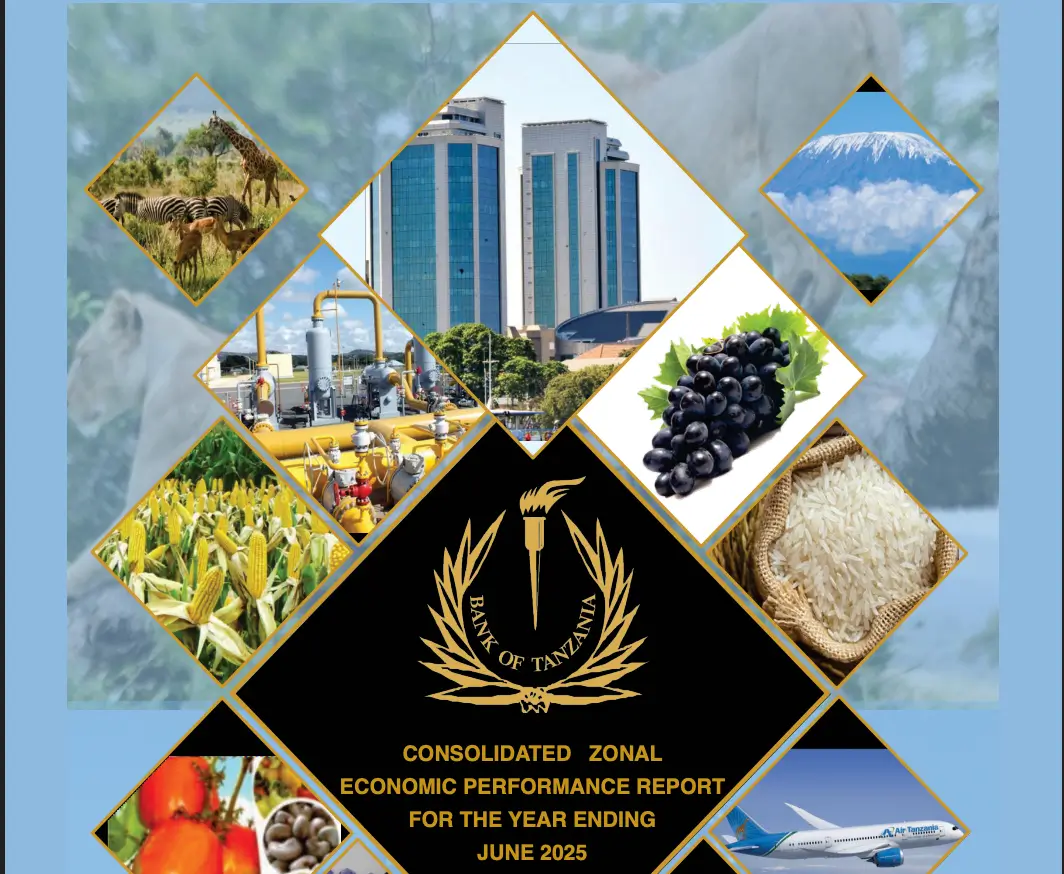
Mikoa 10 Tajiri Tanzania 2025 (Consolidated Zonal Economic Perfomance Report)
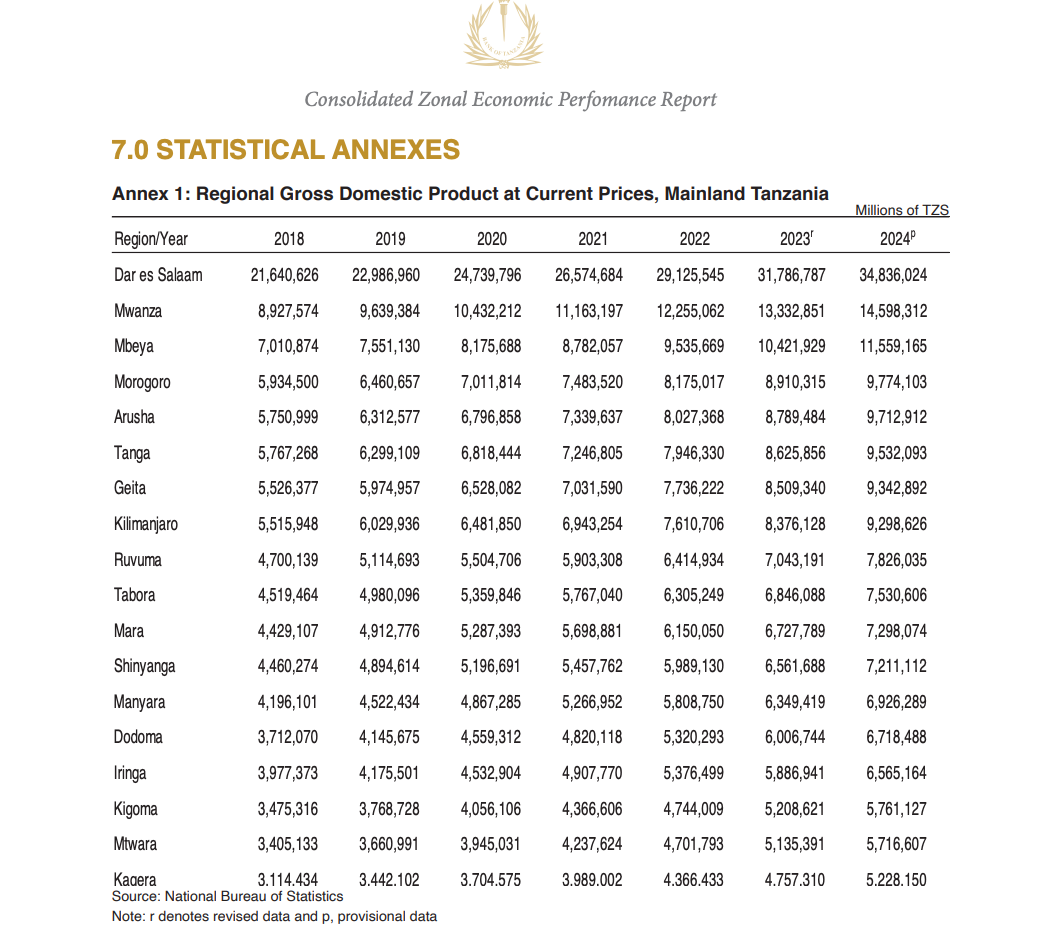
- Dar es Salaam: Trilion 34,836,024
- Mwanza: Trilion 14,598,312
- Mbeya: Trilion 11,559,165
- Morogoro: Trilion 9,774,103
- Arusha: Trilion 9,712,912
- Tanga: Trilion 9,532,093
- Geita: Trilion 9,342,892
- Kilimanjaro: Trilion 9,298,626
- Ruvuma: Trilion 7,826,035
- Tabora: Trilion 7,530,606
[penci_button link=”https://assengaonline.com/wp-content/uploads/2025/12/2025121711505300-1.pdf” icon=”fa fa-address-book” icon_position=”left” align=”center” full=”1″ size=”large”]CHECK OUT FULL REPORT HERE[/penci_button]
ECONOMIC DEVELOPMENTS
Gross Domestic Product
Nominal Gross Domestic Product (GDP) increased to TZS 205,846.5 billion in 2024 from TZS 186,753.7 billion in 2023 (Table 1.1). The outturn was driven by strong performance in key economic activities including agriculture, construction, financial and insurance services, mining and quarrying, trade and manufacturing. All zones recorded an increase in nominal GDP with Lake zone accounting for the largest share at 25.8 percent followed by Northern and Dar es Salaam zones.