
Which country is this | Baikoko Tanzania


The NTA Admission Guidebook 2026/2027 is the official reference document for every student seeking to join certificate and diploma programmes at TVET institutions in Tanzania. Whether you hold CSEE results or an NTA Level 4 certificate, this guide explains everything you need to know — entry requirements, programmes, institutions, fees, and how to apply.
The NTA Admission Guidebook is an official publication released each academic year by the National Council for Technical and Vocational Education and Training (NACTVET). It serves as the definitive guide for prospective students applying to certificate and diploma programmes in Tanzania’s TVET (Technical and Vocational Education and Training) institutions.
The guidebook contains a comprehensive list of all accredited institutions, the programmes they offer, minimum entry requirements, programme duration, and tuition fees for both local and foreign students. It is prepared before the commencement of admissions each cycle and is the primary reference document for applicants, parents, and education counsellors.
According to NACTVET’s official calendar, compilation of the 2026/2027 Admission Guidebook was scheduled to begin on 1st April 2026 and conclude by 8th May 2026. Students should check the NACTVET website at nactvet.go.tz for the official PDF release.
NACTVET — the National Council for Technical and Vocational Education and Training — is a corporate body established under NACTVET Act, Cap. 129. It is the regulatory authority mandated to coordinate, oversee, and regulate the provision of technical and vocational education and training across Tanzania.
The National Technical Awards (NTA) is Tanzania’s national qualifications framework for TVET programmes. It ensures standardised, quality-assured qualifications that meet labour market demands and respond to technological developments. NACTVET is a multi-sectoral body, meaning it oversees programmes across health, engineering, business, arts, social sciences, and more.
The NTA framework is structured in levels, each building on the previous. Here are the levels covered by the 2026/2027 Admission Guidebook:
The admission criteria in the guidebook are set by NACTVET in accordance with approved Curriculum Information Reports for each programme. Entry requirements differ by programme type:
Applications for NTA programmes are submitted directly to individual institutions through their online admission systems. Here is how to navigate the process:
The NTA Guidebook organises programmes by subject boards. This helps you quickly navigate to relevant courses. The main subject boards include:
Science and Allied Technologies (SAT) — covering engineering, ICT, laboratory sciences, environmental studies, and related fields. Business and Management — covering accounting, business administration, office administration, procurement, and entrepreneurship. Health and Allied Sciences — covering nursing, pharmacy, medical laboratory, community health, and health records. Social Sciences and Humanities — covering education, social work, community development, journalism, and mass communication. Agriculture and Natural Resources — covering agronomy, livestock, forestry, fisheries, and food technology. Arts and Creative Industries — covering graphic arts, printing, fashion, and performing arts.
Programmes in the guidebook are offered at institutions across all regions of Tanzania, including Dar es Salaam, Dodoma, Arusha, Mwanza, Mbeya, Tanga, Morogoro, and Zanzibar. Students can apply to institutions in any region regardless of their home location.
Tuition fees vary by institution, programme, and level of study. Based on the 2025/2026 guidebook as a reference, local student fees for NTA programmes at most institutions typically range from around TSH 750,000 to TSH 1,250,000 per year, depending on the programme and the institution offering it. Health and engineering programmes tend to attract higher fees than business or arts programmes.
Foreign student fees are set separately and are generally significantly higher. The official 2026/2027 guidebook will contain the confirmed fee structure for each institution and programme, so students are strongly advised to verify fees in the published document before applying.
The official guidebook is made available as a free PDF download through NACTVET’s official channels. Here is where to get it:
The primary source is the NACTVET official website at nactvet.go.tz. Navigate to the Downloads section, where both the NTA Institutions Guidebook and the Universities Guidebook are published each cycle. The document is available at no cost and can be saved to your phone or computer for offline reference. You can also find guidebook announcements and links shared on NACTVET’s official social media pages. Unofficial education websites in Tanzania often aggregate and re-share the PDF, but always verify the document against the official NACTVET source to ensure you have the correct and up-to-date version.
Note that NACTVET publishes two distinct guidebooks each cycle: the NTA Institutions Guidebook (for NTA Level 4 to 6 programmes at TVET colleges) and the Universities Guidebook (for NTA Level 6 and above at universities). Make sure you download the correct one for your level of study.

Download the official guidebook from NACTVET and start your application today.



These videos are more than just entertainment. They are a window into a living, breathing culture — one shaped by centuries of trade, migration, Islamic heritage, and the warm, salty breeze of the Indian Ocean.

The surge in online viewership of Swahili coastal music videos is no accident. Here’s why audiences across East Africa and the diaspora can’t get enough:
For millions of Swahili speakers, these videos are a celebration of who they are. The colorful kangas, bui-buis, kofias, and ornate coastal architecture featured in the visuals tell the story of a proud and ancient civilization.
Coastal Swahili songs often revolve around themes of love, heartbreak, community, and daily coastal life — stories that resonate deeply with local audiences.
In recent years, East African music video production has taken a huge leap forward. Directors and cinematographers are now shooting stunning visuals against the backdrop of Zanzibar’s Stone Town, Mombasa’s Old Town, and the pristine beaches of Kilifi and Bagamoyo.
Platforms like YouTube, TikTok, and Instagram have given coastal artists a global stage. Fans search specifically for video za vibao kata vya uswahilini to find the latest drops from their favorite artists.
Swahili communities in the UK, USA, Middle East, and beyond use these videos to stay connected to home. Music is the bridge that keeps culture alive across borders.
No discussion of coastal Swahili music videos is complete without talking about dance. The choreography in these videos is deeply rooted in tradition:
Dance in these videos isn’t just performance — it’s a form of storytelling, spiritual expression, and community bonding.
The scene is changing fast. A new generation of coastal artists and directors is:
Q: What does “vibao” mean in Swahili? A: Vibao (singular: kibao) means “hits” or “bangers” in colloquial Swahili — popular, catchy songs that get everyone talking.
Q: What is “Uswahilini”? A: Uswahilini refers to the Swahili-speaking coastal region and cultural space — encompassing parts of Kenya, Tanzania, Zanzibar, the Comoros, and northern Mozambique.
Q: Are these videos suitable for all ages? A: Most Swahili coastal music videos are family-friendly and celebrate culture, love, and community. Some modern videos may contain mature themes, so parental guidance is recommended for younger viewers.
Q: Can I find old/classic coastal Swahili music videos online? A: Yes! Many archival videos from the 1970s–1990s have been digitized and uploaded to YouTube. Search for classic Taarab, Muziki wa Dansi, or specific artists like Fadhili William or Culture Musical Club.

Stay away from old women The Old women
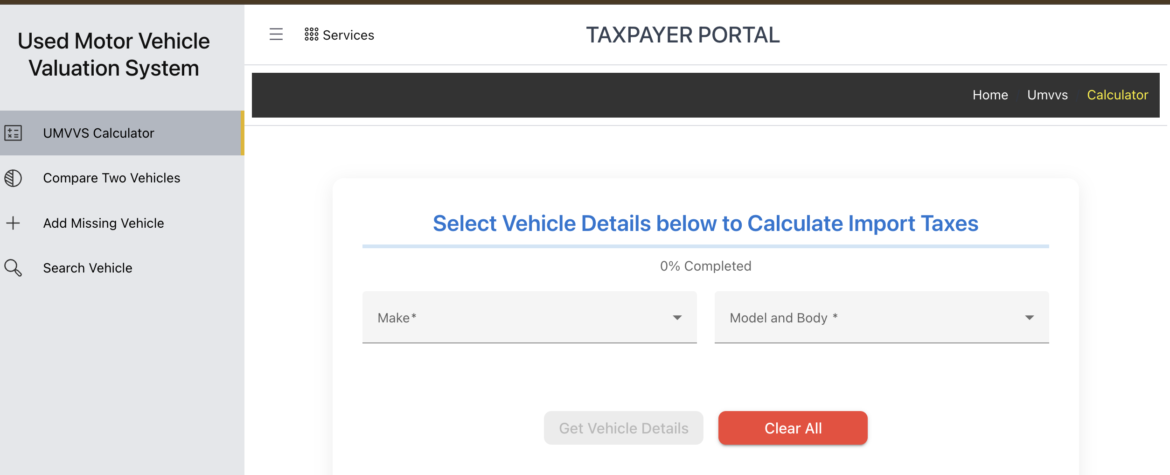
Are you planning to import a vehicle into Tanzania in 2026? Or are you trying to buy or sell a used car and want to know its fair market value? Then the TRA Used Motor Vehicle Valuation System (UMVVS) — commonly known as the TRA used car calculator — is the most important tool you need to understand.
In this comprehensive guide, we break down exactly how Tanzania’s official vehicle valuation system works, how to use the TRA car calculator step by step, which taxes apply, and expert tips to avoid costly mistakes when importing a vehicle into Tanzania.
The Used Motor Vehicle Valuation System (UMVVS) is an official online tool developed by the Tanzania Revenue Authority (TRA) to help importers, dealers, buyers, and sellers determine the taxable value of used motor vehicles in Tanzania.
The TRA is a semi-autonomous government agency responsible for managing the assessment, collection, and accounting of all central government revenue in Tanzania. It operates under the Ministry of Finance and Economic Affairs, with its main offices located in Dar es Salaam.
The UMVVS calculator was created for a simple but critical purpose: to bring transparency and consistency to vehicle valuation, ensuring that everyone — whether a first-time importer or an experienced car dealer — pays the correct amount of import duty and taxes based on a standardized valuation method.
The system is accessible directly through the TRA’s official government gateway at gateway.tra.go.tz/umvvs.
In 2026, Tanzania’s automotive import market continues to grow rapidly, with thousands of used vehicles being imported every year — primarily from Japan, the United Arab Emirates, and the United Kingdom.
Without a reliable valuation tool, importers would face:
The TRA used car calculator solves all these problems by providing a standardized, database-driven estimate of what a vehicle is worth — and therefore what taxes are owed — before the car even arrives in Tanzania.
Tanzania uses a Current Retail Selling Price (CRSP) method to value used vehicles for tax purposes. This is different from many other countries that use CIF (Cost, Insurance, and Freight) as the tax base.
The Current Retail Selling Price (CRSP) is the price at which a particular vehicle make and model would be sold new in Tanzania today. The TRA maintains a comprehensive database of CRSPs for every make and model sold or imported into the country.
The CRSP forms the foundation of the valuation. From the CRSP, a depreciation factor is applied based on the vehicle’s age and condition to arrive at the taxable value of the used vehicle.
The TRA applies a depreciation schedule based on the age of the vehicle:
| Vehicle Age | Depreciation Rate |
|---|---|
| Less than 1 year | 0% |
| 1 to 2 years | 17% |
| 2 to 3 years | 27% |
| 3 to 4 years | 36% |
| 4 to 5 years | 44% |
| 5 to 6 years | 50% |
| 6 to 7 years | 55% |
| 7 to 8 years | 59% |
| Over 8 years | Special “Dumping Fee” applies |
Vehicles over 8 years old are treated differently. Tanzania discourages importation of very old vehicles through the application of a Dumping Fee — an additional tax penalty of 10–20% — to protect the local environment and road safety standards.
Once the taxable value (CRSP minus depreciation) is established, several taxes are applied. Here is a breakdown of the key taxes you need to know:
Import duty on most used vehicles is generally 25% of the CIF value (Cost, Insurance, and Freight — the value of the vehicle including shipping and insurance to the Tanzanian port).
Excise duty depends on the engine capacity of the vehicle:
Electric vehicles and hybrid vehicles may attract different excise duty rates as Tanzania updates its policies in line with its national EV adoption strategy.
The standard VAT rate in Tanzania is 18%, applied on the combined customs value plus import duty and excise duty.
A 1.5% Railway Development Levy is charged to support infrastructure development in Tanzania.
For non-utility vehicles older than 8 years, an additional dumping fee of 10–20% is applied as a penalty for importing old vehicles into Tanzania.
| Tax Type | Rate |
|---|---|
| Import Duty | ~25% of CIF |
| Excise Duty | 0%, 10%, or 20% (engine-dependent) |
| VAT | 18% |
| Railway Levy | 1.5% |
| Dumping Fee (8+ year vehicles) | 10–20% additional |
Here is a detailed walkthrough of how to use the TRA Used Motor Vehicle Valuation System online:
Go to the TRA’s official used vehicle valuation portal. The primary URL is https://taxpayerportal.tra.go.tz/#/umvvs/calculator
Make sure you are using the official TRA government website to ensure accurate and legally valid valuations.
From the drop-down menu, select the make (brand) of the vehicle you want to value — for example, Toyota, Nissan, Mitsubishi, Honda, Subaru, etc.
After selecting the make, choose the specific model — for example, Toyota Land Cruiser, Toyota Hilux, Nissan X-Trail, Subaru Forester, etc.
Enter or select the year of manufacture of the vehicle. This determines the depreciation rate that will be applied to the CRSP.
Input the engine size in cubic centimeters (cc). This determines the excise duty rate applicable to your vehicle.
The UMVVS calculator will then display:
The TRA UMVVS also offers a Side-by-Side Used Motor Vehicle Value Comparison feature, allowing you to compare the valuations of two different vehicles at the same time. This is extremely useful if you are deciding between two models or verifying a TRA vehicle reference code for a specific car.
Before you log onto the UMVVS, have the following details ready:
While exact figures depend on engine size, year, and current CRSP data in the TRA database, here is a general sense of what importers typically face:
Toyota Land Cruiser Prado (2018, 2700cc): High CRSP + 10% excise duty + 18% VAT = Significant total tax liability. Importers should expect to pay a tax amount approaching or exceeding the vehicle’s purchase price in some cases.
Toyota Wish / Honda Fit (2015, 1500cc): Moderate CRSP + 0% or 10% excise duty = More affordable tax burden, making these popular options for budget importers.
Nissan X-Trail (2014, 2000cc): Moderate-to-high CRSP + possible dumping fee (over 8 years old) = Higher effective tax rate. Importers should carefully consider vehicle age when budgeting.
Pro Tip: The TRA UMVVS provides the most accurate estimates. Use it as your primary reference, not third-party calculators.
Several third-party websites offer Tanzania vehicle import duty calculators. While these can be useful for rough estimates, they come with important limitations:
Always use the official TRA UMVVS at gateway.tra.go.tz for any official valuation and for planning purposes. Third-party tools are best used only for preliminary research.
Yes. The TRA Used Motor Vehicle Valuation System is a free, publicly accessible tool available on the TRA government website.
Yes. While the calculator was primarily designed for import taxation purposes, it is widely used by local buyers and sellers as a reference point for fair market valuation of used vehicles in Tanzania.
CIF stands for Cost, Insurance, and Freight — it is the total value of the vehicle including its purchase price, the cost of shipping it to Tanzania, and insurance during transit. Some taxes (like import duty) are calculated as a percentage of CIF.
Not necessarily. Tanzania has been updating its policies around electric vehicle taxation. The TRA announced mandatory electric vehicle registration in 2025, and EV-specific tax rates are evolving. Always check the latest TRA guidelines for EVs.
Vehicles older than 8 years attract a Dumping Fee on top of regular taxes, making them significantly more expensive to import. This policy is designed to discourage importation of old, high-emission vehicles.
The TRA vehicle reference code is assigned by the TRA system. You can search for it through the UMVVS portal using the vehicle’s make, model, and year of manufacture.
Yes. If you believe the TRA’s valuation is incorrect or does not reflect the true condition or value of your vehicle, you can raise a dispute with the Tanzania Revenue Authority through their official complaints and appeals process.
1. Always check the vehicle age carefully. The difference between a 7-year-old and an 8-year-old vehicle can mean thousands of extra shillings in Dumping Fees. Before purchasing a vehicle abroad, confirm the exact year of manufacture.
2. Factor in CIF, not just purchase price. Your tax liability is partly based on CIF — which includes shipping and insurance. Get accurate shipping quotes before finalizing your import budget.
3. Consider engine size strategically. Vehicles with smaller engines attract lower excise duty rates. If you are deciding between two similar models with different engine sizes, the tax difference can be substantial.
4. Use the Side-by-Side Comparison feature. If you are comparing two vehicles, use the UMVVS’s built-in comparison tool rather than running two separate searches. It saves time and ensures consistent valuation parameters.
5. Budget for all taxes, not just import duty. Many first-time importers underestimate their total tax bill by only accounting for import duty. Remember to include excise duty, VAT, the railway levy, and any applicable dumping fees in your calculations.
The official TRA UMVVS links are:
For further assistance, you can visit TRA offices located at 28 Edward Sokoine Drive, Dar es Salaam, or contact the TRA customer service center.
The TRA Used Motor Vehicle Valuation System 2026 is an indispensable tool for anyone buying, selling, or importing a used vehicle in Tanzania. By understanding how the CRSP-based valuation works, how depreciation is applied, and what taxes are involved, you can plan your vehicle import or purchase with confidence and avoid unexpected financial surprises at the port.
Whether you are a first-time importer bringing in a Toyota Hilux from Japan, a car dealer managing a fleet of imports, or a local buyer trying to understand what a used car is truly worth — the TRA used car calculator gives you the transparency and information you need.
Use the official TRA portal, factor in all applicable taxes, and always verify your vehicle’s age and engine size before making any purchase decisions. With the right preparation, importing a vehicle into Tanzania in 2026 can be a smooth and well-managed process.
Disclaimer: Tax rates and policies are subject to change. Always verify the latest rates and regulations directly with the Tanzania Revenue Authority (TRA) at tra.go.tz before making any financial decisions.

Pure Romance: Gen Z Guy Leaves Netizens Talking After Overwhelming His ‘Mumama’ with Flirty Compliments


Mohammed Dewji, popularly known as “Mo,” whose wealth in 2026 is estimated at $2.1 billion — equivalent to approximately 5.45 trillion Tanzanian shillings — continues to hold the top position in Tanzania and across the East and Central African region. Dewji is the Chief Executive Officer of MeTL Group, a major Tanzanian business company founded by his father in the 1970s.
The company is involved in various manufacturing and trading activities, including textile production, grain milling into flour, beverage production, and edible oil manufacturing across East, Southern, and Central Africa. In addition to Tanzania, MeTL also operates in 10 African countries, including Uganda, Ethiopia, and Kenya.

This website uses cookies to improve your experience. We'll assume you're ok with this, but you can opt-out if you wish. Accept Read More

 Reload document
 Open in new tab